Dummy Flight Ticket for Schengen Visa: What Embassies Actually Check

- A dummy flight ticket is not a valid travel document
- What embassies usually want is a flight reservation with a PNR
- A reservation is a real airline booking record that can be checked
- A reservation is not a paid ticket and does not guarantee a visa
- The consulate makes the final decision on your application
Why people search for a dummy flight ticket

People often type "dummy flight ticket schengen visa" into a search bar when they are staring at a visa checklist and see a line asking for proof of onward travel. The phrase sounds like a shortcut, and the worry behind it is usually very ordinary: they have not yet bought a flight, they do not want to pay for a ticket they might not use, and they still need something concrete to attach to the application.
Take someone living in Manchester who has been offered a short business trip to Milan and needs to show a Schengen embassy how they will leave the area. Their employer has not yet confirmed dates, and a full fare feels risky. Searching for a dummy ticket is their attempt to find a document that looks finished without committing to a costly purchase.
Others search the phrase after a refusal or a query from an embassy, or because a friend mentioned it. Some are students, families visiting relatives, or freelancers who cannot easily show a fixed plan. In most cases the real need is simple: a credible, dated record of travel that matches the trip they describe.
It helps to name that need clearly. What applicants usually want is a flight reservation, a genuine booking record with an airline reference, rather than anything invented. Understanding that difference is the first step toward a file that is honest and easy for a caseworker to read.
What a dummy flight ticket is and is not
A dummy flight ticket is usually described as a mock-up: a document made to look like an airline ticket, often with invented passenger details, a made-up booking code and no airline record behind it. Some people search for one because they think a visa officer only wants to see a plane ticket on paper. That is a misunderstanding worth clearing up, because a fake document is not a safe or acceptable way to support a visa application, and it can cause serious problems for the applicant. Presenting forged or invented travel documents can lead to refusal and to lasting consequences on future applications.
Consider someone from Manchester applying for a short Schengen visa to visit family in Italy. They might assume a printed page with their name and a flight number will do the job. In practice, a caseworker is looking for evidence that the trip is planned and that the applicant will leave, and an invented page proves neither. What the caseworker can usefully check is a booking that exists in the airline's own system and can be confirmed against its reference.
So the honest answer is simple. A dummy ticket is not a valid document, and nobody should offer or submit one. What you actually need, in most cases, is a flight reservation: a real booking record with a genuine airline reference that shows your planned travel. It can be held or unpaid, provided it is a real reservation, and it is far easier to explain and defend than anything made up.
TABLE: Dummy ticket versus flight reservation side by side
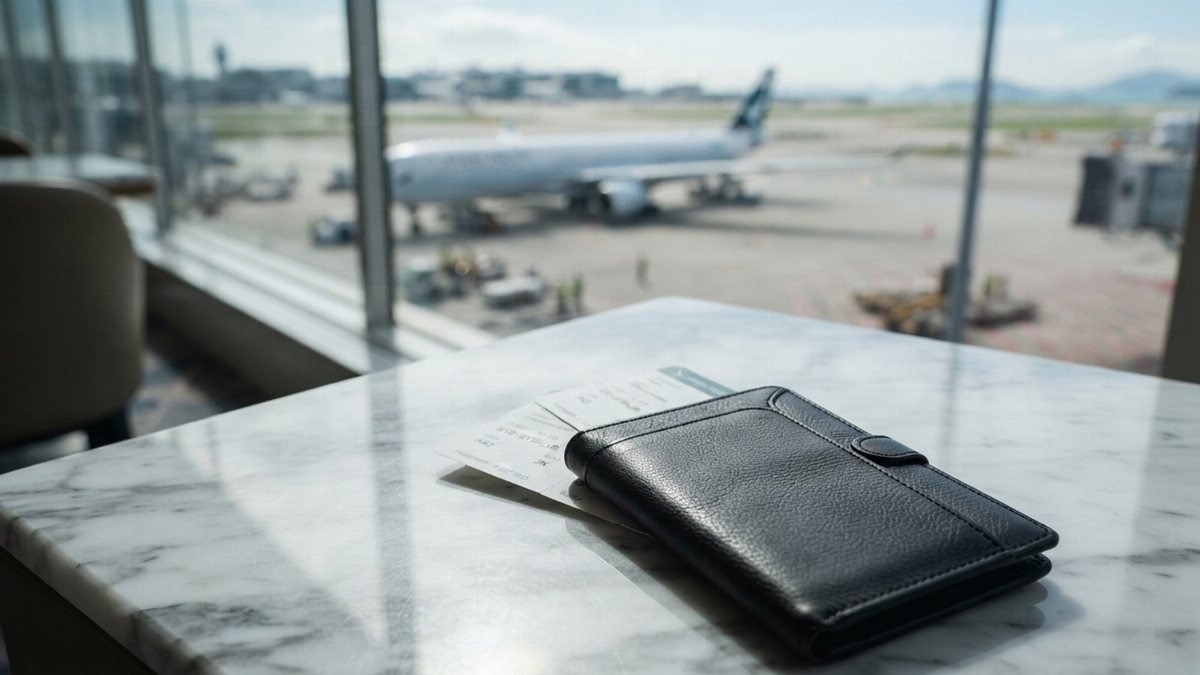
Many people reading this are weighing up two very different things under the same name. A dummy ticket, in the sense people use the phrase, is a document with the look of a flight but no real airline booking behind it. A flight reservation is different: it is a genuine record held by an airline or agent, with a booking reference that can be looked up. The difference matters, because one can be checked and the other cannot.
Here is how the two compare when you place them side by side for a visa file.
What each option shows
A dummy ticket shows a route, dates and a name, but nothing it states can be confirmed with the airline. A flight reservation shows the same kind of details along with a live booking reference, which the airline can match to a real passenger record.
Whether it can be checked
A dummy ticket cannot survive any attempt to verify it, and presenting one is a serious problem for an application. A flight reservation can be looked up by its reference, so the information on your PDF and the record held by the airline should agree. That agreement is what makes it defensible.
How it fits a visa file
Think of a British applicant, for example, someone living in Manchester who plans a short trip to Lisbon and then onward to Barcelona. A real reservation for the Manchester to Lisbon leg, with its reference, gives a case officer something concrete to read against your stated plans. A dummy ticket offers nothing to check and may raise questions you would then struggle to answer.
Nothing here promises an outcome, since the embassy makes its own decision on your whole file. What a flight reservation does is give you an honest, traceable piece of evidence that matches the travel you describe.
What a flight reservation with a PNR looks like
A flight reservation with a PNR looks like a plain, practical page, and once you know its parts you can check one in a few seconds. The most important item is the booking reference, usually a six-character code of letters and numbers. Airlines and booking systems call this the PNR, short for Passenger Name Record, and it is the thread that links the document to a real record held by the airline or its distribution system.
Beneath or beside the reference you will normally see the passenger's name exactly as it appears on their passport, including any middle names. Spelling matters here, so a traveller named Priya Sharma on her passport should not appear as Priya Sharmaa or with the surname reversed. Next comes the itinerary: each flight number, the departure and arrival airports with their codes, the dates and local times, and the cabin class.
Here is a realistic case. Tom, a teacher from Leeds, is applying for a short Schengen visa for a week in Lisbon. His reservation would show the reference in the top corner, his name as printed in his passport, an outbound flight from Leeds Bradford (LBA) to Lisbon (LIS) on a named date, and a return leg a week later. The printout would also show the number of passengers, the baggage allowance and a note of the fare conditions, all of which should match the details he gives on his application form.
Keep in mind that a printout is only a copy of the record. Your reference should be checkable with the airline, and your name and dates should agree exactly with your passport and the rest of your file.
Do Schengen embassies check flight bookings for UK applicants?
Many UK applicants wonder whether a Schengen embassy will look at a flight booking at all, and the honest answer is that it depends on the embassy, the visa centre handling the file and the case officer reviewing it. Some officers will want to see a planned onward or return journey, while others may only read the itinerary you have included and move on. Because practice varies, the safest approach is to assume that anything you submit can be looked at closely.
That is why a checkable record matters more than a polished-looking document. A reservation with a real booking reference, often called a PNR, can be confirmed with the airline using the surname, reference and flight details. A document that looks impressive but cannot be verified gives the reviewer nothing to rely on, and it can raise questions rather than answer them. Clarity and consistency tend to serve applicants far better than decoration.
Consider a British applicant travelling from Manchester to Lisbon for a short trip who has booked a return flight with the airline. Her passport name, the spelling on the reservation and the travel dates all match the rest of her application form, and the airline's booking page confirms the same reference she has printed. If an officer checks, the record stands up without any explanation needed.
Before you submit, make sure the name on your reservation matches your passport letter for letter, that the dates line up with your accommodation and insurance, and that you can look up the booking yourself on the airline's website. Keeping a copy of the booking confirmation in your own records is sensible too.
How a verifiable flight reservation for visa fits your file
For most Schengen applicants, a flight reservation sits in the file as one piece of a set of documents that should tell the same story. Your passport shows who you are, your insurance shows you are covered for the trip, your accommodation shows where you will sleep, and the flight reservation shows how you plan to arrive and leave. When the dates and names match across all four, the file reads as coherent, and that is what a caseworker is looking for.
Take a practical example. Someone living in Manchester applying for a short city break in Lisbon, a Schengen destination, might hold a reservation from Manchester to Lisbon for the 12th, with a return on the 17th. Their hotel booking runs from the 12th to the 17th, and their travel insurance covers the same window. Each document lines up with the others, so nothing needs explaining.
A reservation also works well for people travelling with family. If a parent applies alongside two children, the reservation should list all three passengers with names spelled exactly as they appear on their passports. A mismatch in a single letter is the sort of small detail that creates questions, so it is worth checking before you submit.
Where the dates in your reservation differ from the dates in your application form, the reservation will prompt questions. If your plans change, update the booking with the airline before you apply rather than hoping nobody compares them. A reservation shows your intended travel at the time you booked, so it should reflect your current plans as closely as possible.
Onward ticket or return ticket proof: which do you need?
Many visa applicants are unsure whether the embassy wants proof that they are coming back, or proof that they are leaving on a particular onward journey. The honest answer depends on your trip and your circumstances, and the embassy makes the final decision. What follows is a way to think it through.
A return ticket shows that you intend to leave the Schengen area by a set date, and it suits most short visits: a city break, a family visit, or a business trip with a clear end. If your plans are simple and you will fly home from the same airport you flew in to, a return reservation is usually the most natural document to include. It matches the dates on your application and gives the embassy an easy picture of a visit with a clear start and finish.
An onward reservation is different. It shows that you will travel on to another country after your Schengen stay, which can be the right evidence when you are passing through, moving between destinations, or have a fixed exit to a non-Schengen country. For example, a British applicant visiting Lisbon for four days and then flying from Lisbon to Marrakech would normally show the arrival flight and the onward flight out of the Schengen area, rather than a return to London. The key is that the onward leg must make sense with the rest of your itinerary and your stated dates.
If you are unsure, match the reservation to what you wrote in your application form and your accommodation bookings. Mismatched dates or destinations cause more questions than the type of ticket itself.
Flight itinerary for visa: what the PDF should show
A flight itinerary for visa purposes is the printed or PDF record that sets out your journey in plain terms, and a consular officer reads it quickly, so clarity matters more than decoration. The page should name you exactly as your passport does, including the surname first and given names in the same order and spelling. Each flight segment should show the airline, the flight number, the departure and arrival airports with their city names, the local date and time, and the cabin class. A booking reference, often called the PNR, should appear at the top so the document can be checked against the airline's records.
Look for three things before you rely on it. The dates must match the trip you describe on your application form. The route must make geographic sense, with arrival and departure cities that line up with your stated plans. And the status should read confirmed or ticketed, not pending or on hold, because a held booking reads differently to an officer than a reservation that has been issued.
Take a practical example. Suppose a teacher from Leeds applies for a short Schengen trip, arriving in Lisbon and leaving from Lisbon four days later. Her itinerary should show Leeds Bradford to Lisbon outbound and Lisbon to Leeds Bradford on the return, with the passenger name matching her passport and the dates matching her hotel confirmation. If the itinerary instead showed a flight into Madrid while her application listed Portugal, the officer would have to ask why, and that single gap can slow the whole file.
Airline hold versus reservation: the difference explained
An airline hold and a confirmed flight reservation can look alike on a screen, yet they do different jobs in a visa file. A hold is a temporary block that keeps a fare or seat for a short period while the traveller decides whether to pay. It usually carries an expiry time, and if nobody pays before that time, the airline releases the seat and the record disappears. A reservation, by contrast, is a booking that the airline has confirmed and recorded under a booking reference, sometimes called a PNR, with the passenger name, route and dates attached.
Consider a freelance designer from Leeds who needs a Schengen application lodged for a week-long trip to Lisbon. She finds a fare on Friday afternoon and places a hold to think it over. By the time she sends her documents on Monday, the hold has lapsed, so a screenshot of it would show nothing she could stand behind. A confirmed reservation with a live reference would have shown exactly what the officer wants to see.
Before you book, it is worth asking a few plain questions. Does the record carry a booking reference that the airline can look up? Is the status shown as confirmed rather than held or pending? Does it state the passenger name exactly as it appears on the passport, and does it show the date and time of each leg? Will the document remain valid after your submission date, not merely at the moment you download it? A provider who answers these clearly is giving you something you can rely on.
Common mistakes and what to check before you book
Small errors on a booking are easy to make and easy to miss, and they can cause more trouble than people expect. The most common one is a name that does not match the passport. Check every letter against the photo page, including middle names, and remember that a surname with a hyphen or a space may be recorded differently on the booking. Spelling mistakes can be corrected by the airline in some cases, but it is far simpler to get it right first time.
Dates need the same care. Confirm the day, month and year of each leg, and check that the outbound date falls in the period you have told the embassy you will be travelling. If you are applying from Manchester for a trip to Lisbon, for example, make sure the reservation shows Manchester as the departure airport and the date you intend to fly, not a date on which you have simply pencilled in a plan. Also check the time zone shown, because a late evening departure can shift onto a different calendar day.
Before you pay, confirm passport details: the number, the expiry date and the nationality should all match your current passport. Check that the reservation you are buying is a flight reservation with a booking reference rather than a payment or quote. Ask whether a change to the name or date is possible and at what cost, and whether the reference can be checked directly with the airline. A reliable provider will answer these questions plainly, so take your time over them before committing.
Useful next steps
- Work out your dates with the free visa timeline planner and check your papers with the reservation validity checker.
- Read: Onward Ticket for Visa: Reservation, Refundable Ticket or Paid Ticket?
- Read: How to Verify a Flight Reservation (PNR) on the Airline Website
Frequently asked questions
Is a dummy flight ticket accepted for a Schengen visa?
A dummy ticket is not a valid document, so it should not be used; most applicants need a real flight reservation with a PNR instead.
What is a PNR on a flight reservation?
A PNR, or passenger name record, is the booking reference an airline uses to locate your reservation, which can be checked.
How quickly will I receive my reservation PDF?
HappyVisiont aims to send your PDF within two hours of your booking.
Can I use a flight reservation for an onward trip?
Yes, many applicants use a reservation to show an onward journey, though the right evidence depends on your trip.
Should I book a flight before my visa is approved?
Many applicants book a reservation to show plans, but check the embassy's guidance on what it wants and when.
Is a flight reservation the same as a ticket?
No. A reservation is a booking record with an airline reference. A ticket is paid for and lets you fly.
More from the blog
Schengen, UK and USA Visas: How Travel Proof Differs
Short answer: Schengen, UK and USA visa offices all ask for some evidence of your onward or return travel, but they weigh it differently and none of them decide ...

Student Worker Visa Flight Reservation UK: Onward Travel Plans for Visa Files
Short answer: A student worker visa flight reservation is a real airline booking record with a booking reference, showing when you plan to travel to or from the ...

Family Flight Reservation for Visa: One PDF for Many Travellers
Short answer: A family flight reservation for visa is usually one airline booking record that lists every traveller with matching dates, routes and full names, s...