Family Flight Reservation for Visa: Myths and Facts for Groups

- A flight reservation is a real airline booking with a reference, not a paid ticket
- every traveller needs their name spelled exactly as in their passport
- infants and children are usually listed on the same booking as their parent
- dates and routes must match across the whole group
- the embassy, not the booking service, decides on the visa
Myth: one PDF is enough for a whole family

Many families assume that a single PDF will cover everyone travelling together, and sometimes it does. The honest answer is that one document can hold several passengers, but it needs to show each traveller's full name exactly as it appears on their passport, along with their own ticket details where the airline issues them. A group booking under one reference often reads more clearly to an embassy officer than a stack of separate files, because everything sits in one place and the dates match across the whole party.
Take a family of four flying from Manchester to Lagos, with two adults, a teenager and a child. The parents' passports, the teenager's passport and the child's passport are all different, so the reservation needs four correct name entries. When these sit together on one itinerary with the same outbound and return dates, the caseworker can see at a glance that the family is travelling as a unit. That kind of clarity is what most applicants are really after.
It is still worth checking that the reservation lists every traveller and not only the lead name. A single PDF that names one adult and mentions "plus family" will not do the job. Each person should appear, with spelling that matches their travel document.
HappyVisiont can prepare a group flight reservation for visa use, with each traveller listed on one booking record. The embassy makes the final decision on any application, so treat the reservation as supporting evidence and not a promise of approval.
Myth: infants need their own separate reservation
Myth: infants need their own separate reservation
Many families assume that a baby travelling on a flight needs a seat and a full booking of their own, and that a family flight reservation for visa purposes must therefore be split into several records. In practice, the picture is usually simpler than that. A very young child flying on an adult's knee is commonly recorded as an infant passenger attached to a parent's booking, rather than as a separate paying traveller. The exact rules, age limits and how the airline shows the infant on the record vary between carriers, so it is worth reading the airline's own wording before assuming anything.
Take a father flying from Manchester to Lagos with a nine-month-old. The airline may list the baby as an infant on the same booking reference as the parent, with the infant noted against the adult who will hold them. That single record then shows the whole party, which is what a visa officer usually wants to see: who is travelling, on which dates, and on which route.
Because infant handling differs, it helps to tell the airline or the booking adviser the child's exact date of birth at the start, not after the reservation is made. A name or date that does not match the child's passport can cause problems at check-in, even if the reservation itself looks correct. Make sure the spelling of the infant's name matches their passport exactly, as it would for any other traveller.
A reservation like this is supporting evidence of your travel plans, not a promise of approval. The embassy makes the final decision on every application, and an infant listed on a parent's record does not change that. What the record does is set out a clear, consistent picture of the journey, which makes the file easier to read.
Myth: children can use a different date to their parents
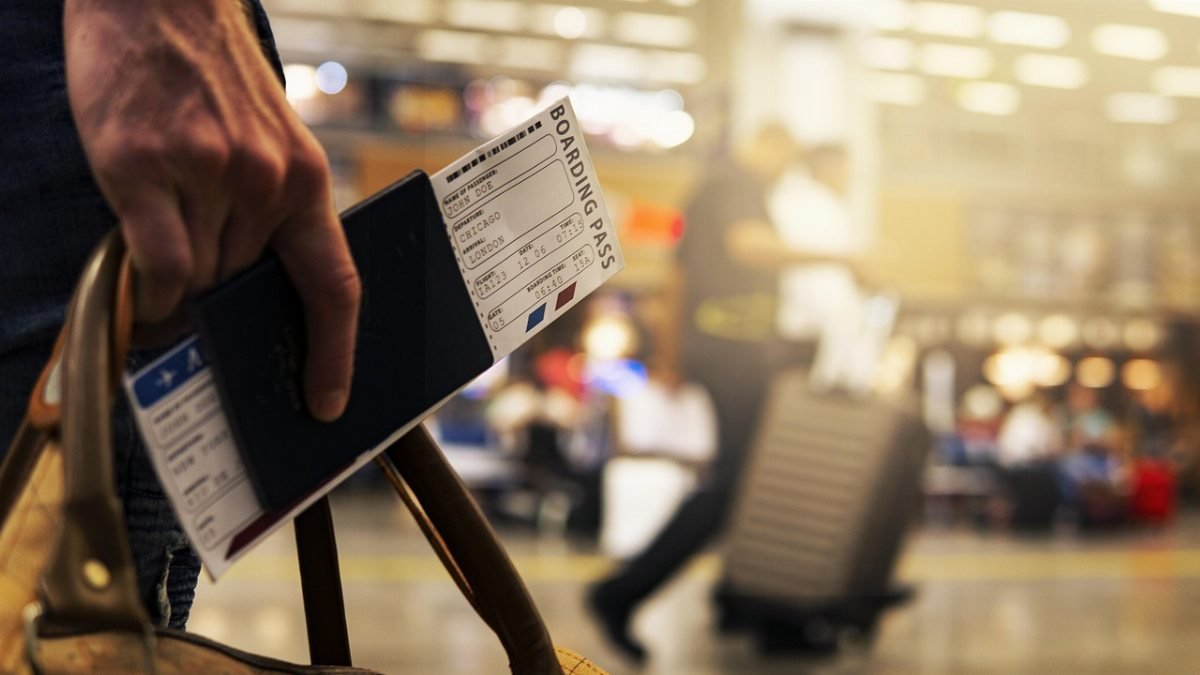
Many families assume that a child can fly on a different date from their parents, perhaps because one of them has to leave earlier for work. In most cases a visa file works better when everyone in the household is shown travelling together on the same dates. A caseworker reading a family file looks for a single, coherent story, and a child whose dates drift away from their parents can raise questions that take time to clear up.
Consider a family of four from Leeds applying to visit relatives in Toronto, where the father must return to the UK after nine days because of a work commitment. If the children are booked to stay for the full three weeks, the file shows the family arriving and leaving at different times, and the reader has to work out why. It is far simpler to set out one shared outbound date and one shared return date for everyone, and then explain any difference in a short covering note rather than leaving the records to speak for themselves.
If the trip genuinely has to be split across two sets of dates, the honest approach is to make each set of records clear and to say so plainly. Keep a separate reservation for each leg, label them clearly by traveller and date, and make sure the reasons for the difference are written down and supported by the rest of the file. A flight reservation for visa purposes should always match the dates the applicant is actually planning to travel, so nothing on paper contradicts the plan.
If your family's dates differ, our team can help you set out each reservation so the picture is easy to follow. You can book a flight reservation here, and receive your PDF within 2 hours.
Myth: a group of friends can use any name order
Many people assume that a group of friends travelling together can list their names in whatever order suits them, as long as everyone is on the same booking. That is not how it works. Airlines and immigration officers check each name against the passport, and the name on the reservation has to match the passport page exactly, letter for letter, in the same order that the document shows.
Start with the passport itself. Look at the machine-readable zone at the bottom of the photo page, or the printed surname and given names in the visual zone. Surnames go first, then given names, and the given names are often listed in full, including any middle names. Write each one exactly as printed, using the same spelling, accents and hyphens where they appear.
Middle names are where most errors creep in. If a passport shows "Amara Joy Osei" with no hyphen, do not write "Amara-Joy". If a traveller has two given names but only one is on the passport, enter only what is printed. Spacing matters too: a double space or a missing space can cause a mismatch when the record is checked, so type each name once and copy it across rather than retyping it for every line.
Here is a real-life case. Three friends from Leeds, one of whom holds a passport issued in Lagos, planned a joint trip to Toronto. Their first draft listed the Nigerian passport holder's name in the order they usually used socially, which did not match the photo page. Correcting it to the exact passport order before booking saved them a rebooking fee and an awkward conversation at the embassy.
TABLE grouping options: family, parents and a group of friends
Grouping travellers on one reservation looks simple, but the three common setups differ in small and important ways. A family booking, a parent-plus-children booking and a friends' group booking may all sit under one booking reference, yet the names, dates and the way the embassy reads the file each change. Seeing them side by side makes it easier to choose the right one before you pay.
For a family travelling together on the same dates and route, every traveller is listed exactly as printed in their passport, with the same outbound and return dates. A parent with children is similar, though a child's name must match their own passport and the adult is usually listed as the accompanying parent or guardian. A group of friends is the most varied: each person has their own passport, their own date of birth and sometimes slightly different return flights, so each name needs individual checking.
- Family booking: one shared itinerary, identical dates, names taken from each passport page.
- Parent and children: the same dates for everyone, with the adult's name and the children's names kept distinct.
- Friends' group: each traveller's own passport details, and dates can differ if people are returning separately.
Take a family from Lagos flying to London Heathrow for a short visit. They gave the booking a shared surname spelling from a school form, and the passport showed a different middle name for one child. Matching every name to the photo page before booking kept the reservation consistent with what the embassy would check.
Visiting parents: what to check when older relatives join
Bringing older relatives along adds a few checks that a standard family booking does not always cover. The most important is that every name must match the photo page of their passport exactly, letter for letter, including any second given name that appears there. Many older passports were issued before the current layout, so look closely at how the surname and given names are split and copy them as printed.
Mobility needs are the next thing to think about. If a parent uses a wheelchair, needs help at the gate, or requires extra time for connections, these requests are normally made directly with the airline, not through a reservation alone. Ask the airline what assistance it offers for the route you are flying and note any reference it gives you, so the reservation and the travel plan agree.
Consider the route itself as well. A parent flying from Manchester to Istanbul with one connection will face a very different day from one flying direct from London Heathrow to Toronto. Shorter connections, fewer changes and aisle seats often suit older travellers, and these details belong on the reservation before you submit anything.
Finally, check any medical or dietary notes the airline may ask for, and keep the spelling of every name identical across the passport, the application form and the booking. A consistent record makes the file easier for the visa officer to follow, and it means your parents can travel with less worry on the day.
Flight itinerary for visa versus booking reference
Many applicants use the words "flight itinerary" and "booking reference" as if they meant the same thing, but they do different jobs. The booking reference is a short code, usually six characters, that the airline uses to find your reservation in its system. The flight itinerary is the document that sets out the journey in full: the airline, flight numbers, dates, departure and arrival airports, times and passenger names, usually in a clear layout you can print or show on a screen.
The reference proves that a real reservation exists and can be looked up, while the itinerary shows the plan itself. A visa officer reading a file may want both, because the reference lets them check the booking and the itinerary lets them see at a glance what you intend to do.
Take a retired couple applying to visit their daughter in Manchester from Lagos. Their itinerary shows a return trip on named dates, so the officer can see the length of stay that fits the visit, while the reference lets anyone confirm the booking with the airline. Between them, the two documents tell one consistent story.
A reservation held through HappyVisiont gives you both: a PDF itinerary and a booking reference you can verify directly with the airline. Keep the two matching exactly, and always check that the dates and names in the itinerary match your passport.
Airline hold versus reservation for a family
A temporary airline hold and a confirmed flight reservation can look alike on screen, but they are not the same thing, and a visa officer may treat them differently. A hold is a short-term reservation of seats that the airline keeps for a limited time, often a day or two, while the traveller decides whether to pay. It is useful when plans are still moving, but it usually carries no ticketing commitment and may simply lapse if nobody completes the booking.
A confirmed flight reservation, by contrast, is a real booking record that the airline has issued and holds under a passenger name list. It carries a booking reference, sometimes called a PNR (passenger name record), which the airline can look up. That reference is what lets someone check the details directly rather than taking a document at face value.
Here is how this plays out in practice. Suppose a family of four in Manchester is applying for visitor visas to visit relatives in Toronto, and the application asks for proof of onward travel. A hold placed on the airline's website for four seats, due to expire in 48 hours, shows the seats were available, but it is not something to hand over as the travel plan. A confirmed reservation with a booking reference, covering all four passengers with names matching their passports, is the document that actually answers the question.
If you are still deciding on dates, a hold can be a sensible first step. Once the dates and names are settled, though, move to a confirmed reservation so the record is solid. If you would like to book a flight reservation through HappyVisiont with a verifiable booking reference and a PDF itinerary, you can do that here whenever your details are ready.
Common mistakes before you book a family reservation
Before you book a family flight reservation, a few small details can cause far bigger problems than you might expect. Most of them come down to the difference between what looks right on a page and what the airline's system will accept at check-in. Going through the list calmly before you pay saves time later.
Start with names. Every traveller's name should match their passport exactly, including the order of names, any middle names and the spelling of any double letters or accents. A child named "Amara" on a passport but entered as "Amarah" can trigger a correction request, and a visa officer may question the mismatch. Ask each adult to read their passport name out loud against the reservation before confirming.
Next, check passport expiry dates. Some airlines and destinations require a passport to be valid for a set period after the return date, and the rules differ by route. Look at the expiry date for every person in the family, not just the lead applicant, because a child's passport often gets forgotten.
Changing dates is another common trap. If a parent's leave is approved for a different week, a reservation made for the original dates may need to be reissued, and the airline may charge for the change. Settle the dates first, then book.
Finally, confirm that children's ages fit the airline's rules. Many carriers treat a child as a child, an infant or an adult depending on their age on the day of travel, and that changes whether they need their own seat or fare. Use the airline's published age bands for your route, not an estimate from memory.
For example, a family travelling from Manchester to Lahore with a four-year-old and a baby should confirm the infant's age band on the day of departure before listing them, since a birthday in the weeks before travel can change the category.
Useful next steps
- Work out your dates with the free visa timeline planner and check your papers with the reservation validity checker.
- Read: Onward Ticket for Visa: Reservation, Refundable Ticket or Paid Ticket?
- Read: Flight Reservation London Schengen Visa: Heathrow or Gatwick?
Frequently asked questions
Can children and infants be on the same flight reservation as their parents?
Usually yes, infants are commonly listed on a parent's booking, but check the airline's rules for your route before you rely on it.
Do all travellers need the same flight reservation for visa applications?
Ideally yes, one group booking keeps dates and routes consistent, though some embassies ask for individual documents too.
What is a PNR on a flight reservation?
A PNR is the passenger name record, the booking reference code the airline uses to find your reservation.
Is a flight reservation the same as a paid ticket?
No, a reservation is a booking record with a reference; a paid ticket is a separate purchase, so check what your application asks for.
How quickly can a family reservation PDF arrive?
HAPPY VISIONT aims to send the PDF within about two hours of your order, depending on the details you provide.
Is a flight reservation the same as a ticket?
No. A reservation is a booking record with an airline reference. A ticket is paid for and lets you fly.
More from the blog

Student Worker Visa Flight Reservation UK: Onward Travel Plans for Visa Files
Short answer: A student worker visa flight reservation is a real airline booking record with a booking reference, showing when you plan to travel to or from the ...

Visa Application Flight Reservation Mistakes: Seven Checks Before You Submit
Short answer: Most delays to a visa file come from small details that do not match: a name spelt differently from the passport, a date that does not add up, or a...
How to Check Your PNR for a Visa Reservation on the Airline Website
Short answer: You can check a flight reservation for a visa by entering the six-character booking reference (PNR) and your surname on the airline's manage bookin...