Airline Hold or Fare Lock Versus a Flight Reservation: Which Fits Your Visa File

- An airline hold or fare lock keeps a price or seat for a limited time, so check how long it lasts
- A flight reservation is a real booking record with a booking reference, sometimes called a PNR
- Neither option guarantees a visa, because the embassy or consulate makes that decision
- Read the airline's own terms and wording about holds, fare locks and reservations
- Ask the embassy or consulate which document type they accept before you pay for anything
What is an airline hold, and what does it actually keep for you?
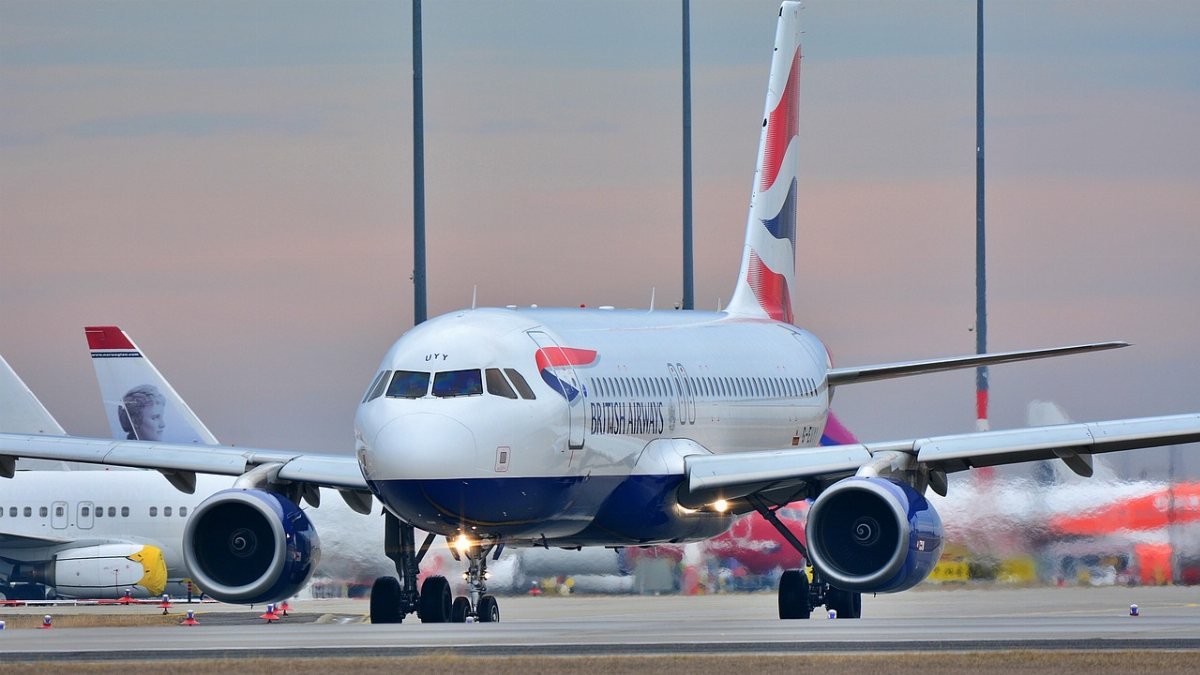
An airline hold is a temporary reservation of seats on a particular flight. The airline or booking system sets seats aside for a short window, so the price and availability you were shown stay put while you decide. Nothing is paid for the ride itself, and the seats are released automatically if the hold is not confirmed in time.
Holds are usually short, often measured in hours or a few days, and the exact length depends on the airline and the route. That is why they expire: an airline cannot keep seats locked indefinitely without taking them off the market for other passengers. Once the window closes, the seats return to general sale and the hold disappears.
Take someone applying from Manchester for a short trip to Lisbon. They find a suitable flight, place a hold to give themselves time to check their dates against the visa appointment, and come back two days later to confirm. If they wait longer than the hold allows, the seats may be gone or the price may have changed, so the hold did its job only within its window.
For a visa file, a hold on its own tends to be a weak document because it shows that seats were available, not that a booking was made. Embassies and consulates usually look for a confirmed flight reservation with a booking reference, which is a different thing. If you are unsure what your application needs, check the embassy's own guidance before you rely on any document.
What is a fare lock, and how is it different from a hold?
A fare lock is a price-protection feature that some airlines and booking channels offer for a short period. You pay a small amount, or sometimes nothing, and the fare you were quoted is held for a set number of hours or days while you decide whether to buy. The aim is to stop the price rising while you think, not to secure a seat on a particular flight.
That is where it differs from a hold. A hold usually keeps a seat or a booking open without full payment, and the airline may still list the record in its system. A fare lock only protects the price. It rarely guarantees that the seat, the date or the route will still be available when the lock ends, and it often says nothing about the passenger's name being fixed to a booking reference you could show to anyone.
For a visa file, the gap matters. A fare lock tells an embassy nothing about a flight that will actually happen, because it can lapse without a trace and it is not something the travel company can confirm to a third party in the same way. A visa officer looking for onward or return travel is usually after a record that stands on its own.
A practical example: someone in Manchester applying for a visa to visit family in Toronto might see a fare lock offered on a Manchester to Toronto fare with a 48-hour window. It helps them compare prices over a weekend. But if they need something to put in the application now, the lock on its own will not give them that.
If you are unsure which of these your application needs, check the embassy's own guidance first, and only then decide what to book.
What is a full flight reservation and what does its booking reference show?

A full flight reservation is a real booking record held by the airline. It lists the passenger's name as it appears in the passport, the flights, the dates and times, the cabin, and the route from departure to arrival. Once the booking is made, the airline issues a booking reference, which is a short code of letters and numbers often called the PNR (passenger name record). That reference is the thing you can check with the airline, and it is what a visa officer may ask to see.
The booking reference is what makes the record verifiable. If someone wants to confirm the trip, they can enter the reference on the airline's website or call the airline and ask them to look it up. The itinerary attached to that reference shows the outbound and, where it is included, the return or onward leg, so it reads as a genuine plan rather than a loose promise. It is worth keeping the reference, the passenger name and the flight numbers somewhere easy to find, because you may be asked for them.
Here is a realistic case. A teacher based in Manchester is applying for a short Schengen visa to attend a conference in Lisbon and then fly home to the UK. She books a reservation from Manchester to Lisbon, with the return leg dated after the conference ends. She receives the PDF itinerary within two hours and places it in her application file with the booking reference clearly visible. The reservation shows her name, dates and route in one place, which is exactly what this kind of record is for.
At HappyVisiont you can book a flight reservation for a visa application, and the PDF comes to your inbox within 2 hours. The reservation shows what the record holds; it does not promise the visa outcome, which is decided by the embassy.
TABLE of hold, fare lock and flight reservation side by side
The table is not a table here, so instead, side by side in plain words, the three options differ in how long they last, what reference they carry, whose name sits on them, how much itinerary detail they show, whether anything has been paid, and what they are usually used for. Read through the comparison below and you will see where each one fits a visa file.
An airline hold is usually a short, temporary reservation an airline or agent places on seats so they are not sold while you decide. It normally lasts a few hours or a day or two, and it often carries no booking reference you can show as a finished record, and no payment has been taken. Holds tend to suit someone who is still choosing a date or waiting for a fare to settle, perhaps a family in Leeds comparing two departure days before committing.
A fare lock is a price guarantee rather than a seat guarantee. You pay, or pay a deposit, to keep a quoted fare for a set period, but the seats themselves may not be confirmed and the itinerary can still shift. It is useful for someone booking a trip for later in the year who wants to protect the price, but it is weaker evidence of a planned journey than a confirmed booking.
A full flight reservation is a confirmed booking record with a booking reference, the passenger name as it appears on the passport, the exact flights, dates and times, and a payment status. It is the document that shows a specific journey has been arranged. A reservation made for a student from Manchester travelling to a US interview is a typical case, because it gives the embassy a concrete plan to read.
Does a Schengen application accept a hold in place of a reservation?
Many people assume a Schengen application will take any travel document that looks official, but that is not how it works in practice. Each consulate sets its own list of what it wants to see, and the rules can differ between member states even when the visa is for the same Schengen area. For that reason, the first step is always to check the consulate's own published requirements, and then to confirm with them directly if anything is unclear.
When you speak to the consulate, ask a few plain questions. Ask whether they accept an airline hold or fare lock at all, or whether they expect a full flight reservation with a booking reference. Ask whether the document needs to show a return or onward journey, and whether it should carry a specific date range. Note the answers and the name of the person or the official page you used, so you have a record if your file is questioned later.
Take a student from Manchester applying for a short study visit to a Schengen country, with a return flight from Manchester Airport in the middle of their stay. Their consulate asks for a confirmed round trip, so a hold that expires in a few days would not satisfy the file, and a full reservation with a booking reference and the matching passport name is what they need. If the consulate instead says a provisional itinerary is enough, that is their decision to state, and it is worth getting that in writing before paying for anything.
What should a US visa applicant ask the embassy about onward travel?
Before you pay for any booking, it helps to go to the embassy or consulate with a short, specific list of questions. Their website often covers the basics, but the details that matter for your file, such as whether they want a confirmed reservation or accept a provisional itinerary, are sometimes buried or left out. Asking directly protects you from paying for the wrong document.
Start with the document type. Ask whether they accept a flight reservation with a booking reference, an itinerary issued by an airline, or only a confirmed ticket. Then ask whether the document must show a return or onward flight out of the United States, and whether a hold or fare lock on its own is acceptable. Get the answers in writing, by email or through the official contact form, so you can refer back to them.
Consider a retired teacher from Leeds applying for a visitor visa to see family in Chicago, who plans to fly onward to Lisbon after three weeks. Her question to the consulate should be: will a flight reservation from London Heathrow to Chicago and an onward reservation to Lisbon satisfy the requirement, and what exactly must be visible on the printout? Her written reply tells her whether to book now or wait.
Also ask how far before the interview the document must be dated or valid, and whether they will review it on the day. If you are unsure, enquire about the process for documents the consulate considers insufficient, since that tells you what a rejected file looks like in practice. Keep every reply with your application records so the advice you followed is clear.
Why does the name on the reservation have to match the passport?
A flight reservation is only useful on a visa file if the name on it matches the passport exactly, and a small difference can cause trouble at check-in or at the border. Airlines check the name against the passport when they issue the booking, and border officers compare the two again. So the spelling needs to be right from the start, not fixed later.
Names are where most of the problems come from. A passport might show a middle name, a double-barrelled surname, or an accent that was dropped when the document was printed. Airlines usually want the name as it appears in the machine-readable zone at the bottom of the photo page. If your passport reads Oluwaseun Adeyemi-Carter and the booking reads Oluwaseun Adeyemi Carter, the system may treat them as different people, and the check-in agent has to decide whether to accept it.
Transliteration adds another layer. If your name is written in a non-Latin alphabet, or your passport uses a romanised form that differs from the spelling you normally use, the booking should follow the passport, not your everyday version. Surname and given name order matters too. Someone whose passport lists the family name first should enter the names in the same order on the reservation, so the two documents line up.
Take a real case: a student from Lagos booking a return flight from London Heathrow for a US student visa interview. Her passport shows Abimbola Chidinma Okafor, but she had always been known as Chidinma Okafor. Her first draft left out the Abimbola, and an earlier booking had swapped the order of her names. Correcting both to match the passport before she sent the file meant the reservation and the document told the same story.
How do airline holds and reservations differ when you apply from the UK?
For UK applicants, the difference between an airline hold and a flight reservation matters most when the visa appointment is close and the file needs something concrete to show. A hold is a short-term reservation of seats that the airline will release if payment is not made, so it is useful for keeping a place while you finish your paperwork. A flight reservation is a confirmed booking with its own booking reference, which is the record embassies usually expect to see.
Take a common case: someone in Manchester applying for a Schengen visa with an appointment at a consulate in London, planning a return flight from Heathrow to Manchester after a trip that begins elsewhere. A hold placed three weeks before the appointment could lapse before the consulate ever looks at it, leaving the file with nothing to check. A reservation with a live reference, dated to match the travel period on the application, gives the consular officer a record they can verify with the airline.
For a smooth match between the booking and the appointment, work through these steps:
- Check the appointment date and the intended travel dates together, so the outbound and return flights fall within the period you have stated on the application.
- Confirm that the departure airport and route are realistic from where you actually live, rather than an unusual choice that invites questions.
- Keep the booking reference, the airline name and the e-ticket or itinerary PDF in the same folder as your passport copy and appointment confirmation.
Booking through HappyVisiont gives you a verifiable flight reservation with a booking reference, delivered as a PDF within two hours, which many UK applicants find simpler than managing a hold that may expire. Whether it is accepted is always for the embassy to decide.
How long before the visa appointment should the reservation be in place?
How long before the visa appointment should the reservation be in place? There is no single rule that applies to every embassy or every visa type, so the honest answer is to check the requirements for your own application and then work backwards from your appointment date. What matters most is that the booking exists on paper, with a reference you can show, by the time you attend your appointment or submit your file. A reservation made well before that point also gives you room to fix a typo in the name or to change dates if your appointment moves.
Keep a copy of everything you receive. That means the booking confirmation, the PDF itinerary and any email from the airline, saved somewhere you can open on your phone and print at short notice. Many applicants are asked to bring documents to a centre, and a record you cannot find in the moment is of little use. If you hold a reservation on a separate system, write down the reference and the date it was made.
If you are considering a hold instead, check the expiry date before anything else. A hold that runs out a few days after your appointment, or one that lapses while your file is still being reviewed, can leave you with a document that no longer shows what you need. Set a reminder for a few days before it ends, and do not assume the airline will extend it for you.
For example, a teacher from Leeds applying for a visa to visit family in Chicago submitted her file three weeks before travel, with her appointment falling in the middle of that window. She booked a flight reservation a little over a month ahead, saved the booking reference and PDF, and had both ready when her appointment came round.
Common mistakes and what to check before you book
Most problems with a flight reservation for a visa file come from small details that are easy to miss. The first is an expired hold. Airline holds usually lapse on their own timetable, and if the hold runs out before your appointment, the record you bring to the embassy no longer shows what you need it to show. Check the expiry date on the document itself, and if it falls before your appointment, plan to replace it rather than hope it still holds.
The second is a name that does not match your passport. Even a missing middle name, a swapped order of surnames or a small spelling difference can cause a question at the desk. Copy your name exactly as it appears on the photo page, character for character, before you enter any details.
The third is treating a hold as if it were a full reservation. A hold is a temporary pause on a seat, and a fare lock simply holds a price. Neither is the same as a flight reservation with a booking reference that an officer can look up. Read the wording of what you have, and if you are unsure whether it counts, ask the embassy or visa centre directly.
Consider Amara, who is applying from Manchester for a trip to Lagos and has a visa appointment in three weeks. She first held a seat, then realised the hold would expire two days before her appointment. Because she had checked the dates early, she still had time to book a proper reservation, keep the reference and attach the PDF.
Before you book, confirm the travel dates, the spelling of your name, the expiry of any document you already hold, and whether your file asks for a reservation or simply a plan. Keep the booking reference somewhere easy to reach. If you would like a verifiable flight reservation for your visa application, you can book one through HappyVisiont, and the PDF will arrive in your inbox within two hours.
Useful next steps
- Work out your dates with the free visa timeline planner and check your papers with the reservation validity checker.
- Read: Visa Application Flight Reservation Mistakes: Seven Checks Before You Submit
- Read: Onward Ticket for Visa: Reservation, Refundable Ticket or Paid Ticket?
Frequently asked questions
Is an airline hold the same as a flight reservation?
No, a hold keeps a price or seat for a short time, while a flight reservation is a booking record with a booking reference.
Can I use a fare lock as proof of onward travel?
It depends on the embassy or consulate, so check their accepted documents and the airline's wording first.
What is a PNR on a flight reservation?
A PNR, or passenger name record, is the booking reference code that airlines use to find your reservation.
Do visa officers accept a flight reservation instead of a ticket?
Many accept a reservation, but requirements vary, so confirm with the embassy or consulate.
How long does an airline hold last?
This depends on the airline, so read its own page for the exact time limit.
Is a flight reservation the same as a ticket?
No. A reservation is a booking record with an airline reference. A ticket is paid for and lets you fly.
More from the blog
Onward Flight Proof for Thailand Entry: Airline Check-in Requirements
Short answer: Entry officials in Thailand may ask to see onward flight proof, which is evidence that you intend to leave the country within your permitted stay, ...
Return Ticket Proof for a Visa Appointment: What to Bring
Short answer: Return ticket proof for a visa appointment is usually a verifiable flight reservation, a real airline booking with a reference code that shows your...
Onward Flight Ticket Mexico Entry: What Officials May Ask About
Short answer: An onward flight ticket for Mexico is a booking that shows how and when you plan to leave the country, and it is often asked for at entry to confir...