Visa Flight Reservations from Manchester, Birmingham and Edinburgh: A Step-by-Step Guide
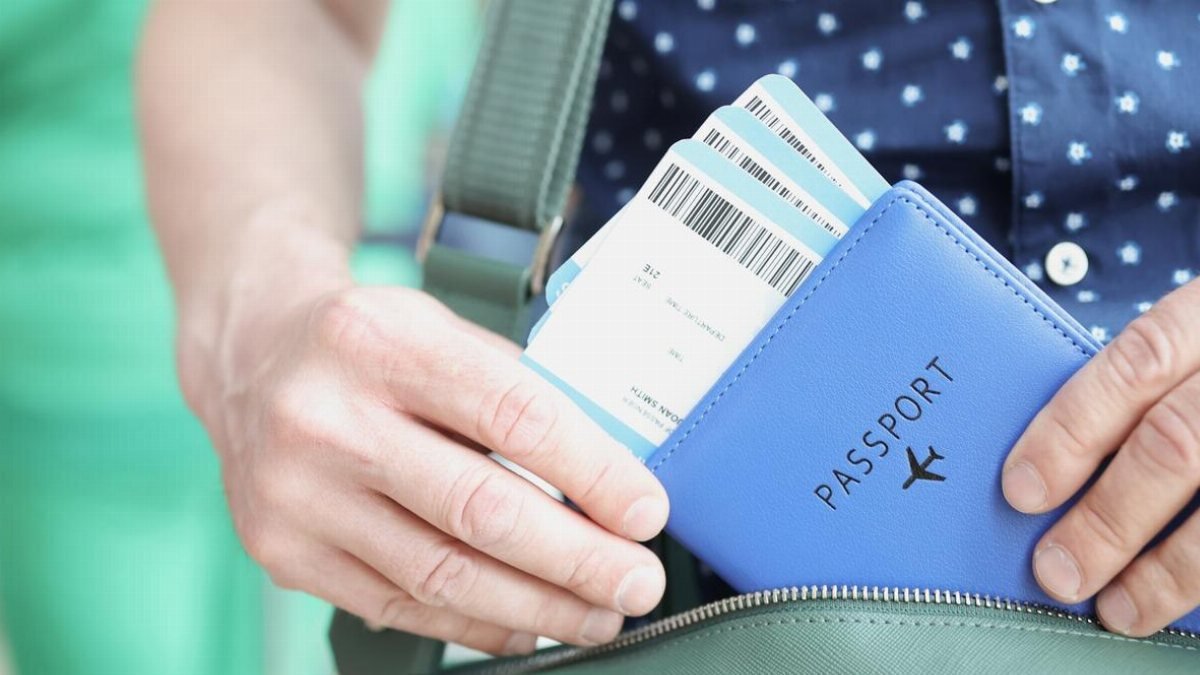
- A flight reservation is a real airline booking with a reference, not a paid ticket
- Check that the passenger name matches your passport exactly
- Direct routes are easier to read at a glance than multi-stop itineraries
- Some airlines hold a reservation for a set time, then release it if unpaid
- The embassy decides the application, so no reservation guarantees a visa
Step one: confirm what your visa office is asking for

Before you spend a single pound on a booking, find out exactly what your visa office wants to see. Requirements differ between countries and between visa types, and the wording used on the official checklist does not always match the everyday terms people use. Start with the official visa application centre or embassy page for your destination and read the section on travel arrangements or supporting documents, rather than relying on forum posts from a few years ago.
In practice, the terms tend to mean the following. An onward ticket is proof that you intend to leave the country you are entering, usually by showing a flight that departs after your planned stay. A return ticket is the same idea, but the flight takes you back to where you started. A flight reservation is a real airline booking record that holds a seat and carries a booking reference, but may not yet be paid for. Many offices accept a reservation, and some ask for a paid ticket, so the wording matters.
Take a student from Manchester applying for a short study visit to Canada. The checklist may say "proof of onward travel", which a confirmed reservation with a reference usually satisfies, whereas a family member applying with a Birmingham departure might be asked for a return ticket specifically. If the wording is unclear, a short email to the visa office asking which document they accept is a sensible step, and their reply is worth keeping with your file.
Step two: choose your departure airport
Choosing where you fly from is less about the airport itself and more about what you can realistically reach and afford. Manchester, Birmingham and Edinburgh each offer a different mix of travel time, cost and direct routes, and it helps to compare them before you settle on a flight reservation.
Manchester tends to have the widest spread of long-haul and Middle East and Africa connections among the three, which makes it a practical choice for many applicants heading to West Africa or the Gulf. Birmingham is often easier to reach for people across the Midlands and the South West, and it has a useful set of direct routes to popular destinations, so the journey to the airport can be the deciding factor. Edinburgh works well for applicants living in Scotland, though its direct options to some visa destinations are fewer, so you may need a connection.
Cost varies more by route and date than by airport, so compare the same journey from each city rather than assuming one is cheaper. For example, a teacher in Leeds applying for a visa to India might find Manchester quicker than Birmingham once the train time is counted, while a family in Glasgow may find a single change from Edinburgh is simpler than driving south. Check direct routes first, because a direct flight often means fewer documents to explain to the visa office.
Whichever airport you pick, make sure the departure city on your reservation matches the one you tell your visa office. A mismatch is a common reason for questions, so keep the two consistent from the start.
Step three: check which routes run direct

Why a direct service makes the itinerary clearer
A direct flight means the aircraft takes you from your departure airport to your destination without changing planes, although it may still stop briefly on the way. For a visa file, that simplicity is worth a great deal. A single flight number, one departure time and one arrival time are easy for an officer to read at a glance, and there are fewer places where a question can arise.
Direct routes are not always available, particularly from the regional airports. Someone travelling from Edinburgh to a city in the United States, for example, may find that most options involve a connection through London or another hub. That is perfectly normal, but a connecting itinerary has more legs to explain, so it helps to know the difference before you commit.
How to check schedules on airline websites before you commit
Before you book, look up the route directly on the airline's own website, not through a summary page. Enter your departure airport, your destination and a provisional travel date, then check whether the search results show a non-stop option. Note the flight number, the scheduled departure and the arrival time, and check how often that service runs.
- Confirm the airport code matches the city you have chosen.
- Check whether the schedule shows any stops or changes of aircraft.
- Look at the operating days, since some routes run only a few times a week.
- Recheck the schedule closer to your date, because airlines do adjust timetables.
Schedules can change, so treat what you see today as a snapshot and keep a note of the date you checked it.
Step four: TABLE of reservation hold versus paid booking
Step four is where people often get confused, because the words "hold", "reservation" and "ticket" are used loosely. A hold is a temporary reservation of seats that the airline will release if nobody pays by a set time. A reservation with a booking reference is a confirmed record of your flight, with a passenger name, route, dates and a code you can quote to the airline. A paid ticket is the same record once the fare has been settled in full and an e-ticket number has been issued.
Here is how they compare in practice:
- Airline hold: cheap to arrange, usually expires within a day or two, and is rarely accepted as evidence of a onward journey on its own, because it can lapse without warning.
- Reservation with a booking reference: a confirmed itinerary that can be checked with the airline and printed as a PDF, which is what most visa offices expect to see.
- Paid ticket: the fullest record, showing payment and an e-ticket number, and the right choice once you have a firm plan and the visa decision is in hand.
Take a student from Birmingham applying for a short course in London. She needs proof of an onward flight home, but her visa decision may be weeks away and she is not yet sure which date she will fly. A hold could expire before she submits, and a fully paid ticket would lock in money she might not spend. A confirmed reservation with a booking reference, which can be amended or cancelled within the airline's rules, suits her best. Once her dates are settled, she can move to a paid booking. Always check the cancellation and change terms before you pay, as these vary by fare.
Step five: read the itinerary line by line
Once your reservation is on screen, slow down and read it the way an officer will: one line at a time. Start with the airline code and flight number, which together identify the service, such as a two-letter carrier code followed by a number. Check that the code matches the airline named in the booking, because a mismatch between the two is the sort of small detail that prompts questions.
Next, look at the dates and times. The departure date should fall on the day you intend to travel, and the times should read in the local time of the airport, with the arrival time shown for the destination city. If a flight crosses the date line or runs overnight, the arrival date may differ from the departure date, and that is normal, but it should be clearly shown.
Then check the passenger name. It should match your passport exactly, including the order of names, any middle names and the spelling of each part. Someone travelling from Birmingham to Nairobi, for example, may find that a shortened first name or a missing middle name on the reservation causes trouble at the visa desk, even though the flight itself is correct. Correct any difference before you go further.
Finally, confirm the booking reference and the route order. The reference should be the same wherever it appears on the document, and the airports should follow the sequence you expect. If anything looks off, contact the reservation team straight away and ask for it to be checked against the airline record, rather than trying to explain it yourself later.
Step six: what a Manchester to Lagos or Birmingham to Delhi reservation looks like
Picture a visa applicant leaving Manchester for Lagos. The reservation will usually show the first leg from Manchester Airport to a connecting hub, followed by the onward sectors to Murtala Muhammed International in Lagos. Do not expect a single flight number covering the whole journey; long-haul trips are often split into several segments on one booking reference.
The first leg is where most people look first, and it is worth reading slowly. Check the departure date, the departure time and that the airport is Manchester (MAN), not a similarly named place. Note the airline, the flight number and the cabin the seat is held in, since these are the details an embassy reviewer tends to compare against your application.
The last leg matters just as much, because it is the one that shows how you intend to leave the country you are visiting. For a Birmingham to Delhi trip, the final sector should land at Delhi (DEL) on a date that fits your intended stay, with the arrival time clearly shown. Make sure the dates on the first and last legs match the length of stay you describe in your application.
If the route includes a change of aircraft in another city, the layover should appear as a separate, timed segment rather than being hidden. A short connection of under an hour is worth double-checking with the airline, so you are not surprised later.
Step seven: how to save and share your PDF
When your PDF arrives, the first thing to do is save it somewhere you can find it again, rather than leaving it in an email thread. Give the file a plain name that says who it belongs to and what it is, such as surname, first name, the word itinerary and the departure city. A name like "Okafor_Ada_itinerary_Manchester-Lagos.pdf" is far easier to locate than "Document(3).pdf" when a visa centre asks for it in a hurry.
Next, make sure the booking reference, sometimes called the PNR, is clearly visible on the first page and not cut off by a page break. If the reference sits in a corner that gets clipped when you convert the file, open it again and check. Many people find it useful to keep a second copy as a screenshot of the top section, as a backup for the reference alone.
Before you upload or send anything, check what format your visa centre accepts. Some want a PDF only, some set a maximum file size, and some ask for a scan rather than a digital export. If the file is too large, reduce it by saving a fresh copy at a lower resolution rather than by shortening or editing the content, because the document must stay exactly as issued.
For example, a Birmingham applicant preparing a Birmingham to Delhi file might find the portal rejects a 6 MB PDF. The simplest fix is to re-save the same unaltered document, keep its booking reference intact, and resubmit it in the stated format.
Step eight: timing your dates around your application
Choosing travel dates is one of the places where people feel most tempted to guess, so it helps to start from what the dates are really for. A flight reservation for a visa file should show a sensible, realistic plan: when you expect to arrive, when you expect to leave, and how those dates sit alongside the length of stay you have applied for. The embassy or visa centre will compare your dates with your application form and supporting papers, so the aim is consistency rather than picking the most convenient-looking pattern.
Begin with the date of your appointment or the date you intend to submit. Your outbound date should fall after the point you realistically expect a decision, allowing a reasonable margin for processing, not a date so far away that the reservation looks unconnected to the application. Many applicants also check the validity period of the visa they are seeking and make sure their return date sits comfortably inside it.
Take a concrete case. Someone flying from Birmingham to Delhi who has booked a visa appointment for the second week of March might reasonably choose a departure in the final days of that month, with a return date that matches the length of stay written on the application form. Choosing an arrival several months later, or a return that clearly exceeds what they have stated, creates a mismatch that officers notice quickly.
Keep your dates honest and easy to explain. If your plans could change, a reservation can be rebooked or cancelled through the airline, so a dated booking is a plan, not a promise. If you are unsure which window suits your case, the guidance from your visa office is the right place to confirm the length of stay before you book.
Step nine: keep your records and the booking reference
Once your reservation is confirmed, the booking reference becomes the thread that ties your visa file to a real airline record. Keep it somewhere easy to reach, not only in a single email. A six-character code on your PDF is simple to lose when you are juggling passport copies, bank statements and a dozen other documents, so write it into your own checklist as well.
To check the booking with the airline, go to the airline's manage-booking page and enter the reference together with your surname, exactly as it appears on your passport. The page should show the same flights, dates and passenger name as your PDF. If anything differs, contact the airline directly rather than assuming the mismatch is harmless, because a small typo in a name can cause real problems at check-in or in the visa file.
Take a Birmingham to Delhi reservation as an example. Suppose the applicant, Priya, is booked on a route from Birmingham through a connecting city, and the reference is printed on a document she has already sent to her visa centre. A week before departure she checks the reference on the airline's site and finds the return leg has moved by a few hours. Because she spotted it early, she can tell her visa office and keep her file accurate rather than discovering the change at the airport.
If your plans change, do not simply let the booking lapse. Speak to the airline about the options for that fare, and let your visa office know if the dates shift in a way that matters to your application. Keep a note of every change and its date, so your records tell the same story as your reservation.
Common mistakes and what to check before you book
Most problems with a visa flight reservation are small, and they are usually easy to fix before you submit anything. The most common is a name that does not match your passport. A single missing letter, a swapped middle name or a transposed date of birth can make a reservation look like it belongs to someone else, so type each name exactly as it appears in the photo page of your passport, including any accents or hyphens the passport uses.
Dates cause the next set of errors. Check that the departure and return dates line up with the dates your visa office has been told, and that the outbound and return legs are in the right order. A reservation for the 14th that shows the 4th is easy to overlook when you are tired, so read the dates aloud and compare them with your application form.
The third mistake is confusing a hold with a reservation. A held booking keeps a fare aside for a short period and is not the same as a confirmed, paid reservation with a booking reference. Be clear with yourself and with your visa office about which one you hold, because the two carry different weight.
For example, a Birmingham applicant booking a return to Delhi might spot a mismatch between the passport spelling of a surname and the booking, which is quick to correct but worth catching early.
- Names match the passport exactly, letter for letter
- Dates and legs are in the correct order and year
- You know whether you hold a reservation or a paid booking
- The booking reference is saved and easy to find
- The PDF opens properly and shows every page of the itinerary
Useful next steps
- Work out your dates with the free visa timeline planner and check your papers with the reservation validity checker.
- Read: Onward Ticket for Visa: Reservation, Refundable Ticket or Paid Ticket?
- Read: Do I Need to Buy a Flight Ticket Before a Visa Is Approved?
Frequently asked questions
What is a flight reservation for a visa?
It is a real airline booking record with a reference number showing your planned route and dates, used as evidence of travel plans.
Is a flight reservation the same as a ticket?
No, a reservation holds your seats with a booking reference, while a ticket is a paid, issued document; the two are not interchangeable.
Can I get a reservation from Birmingham to a direct destination?
It depends on the airline and route schedule, so check current timetables on the airline's own website before choosing dates.
How long does a reservation stay valid?
This varies by airline, so check the hold period shown on your booking and confirm details directly with the airline.
How quickly can I receive my reservation PDF?
Many customers receive the PDF within about two hours of ordering, though timing can vary with demand, so plan ahead of your deadline.
Is a flight reservation the same as a ticket?
No. A reservation is a booking record with an airline reference. A ticket is paid for and lets you fly.
More from the blog
Flight Reservation for Visa Indian in UK: A Calm Guide for Your File
Short answer: A flight reservation for visa applications is a real airline booking record with a booking reference, which many embassies accept as evidence of yo...
Flight Reservation London Schengen Visa: Heathrow or Gatwick?
Short answer: For most UK residents, either Heathrow or Gatwick will do for a Schengen visa flight reservation, so pick the airport that is easiest to reach on y...

Flight Reservation PDF Within 2 Hours: What Happens After You Order
Short answer: A flight reservation PDF usually reaches your inbox within 2 hours because a checked booking record is created with a real airline reference (PNR) ...